Modeling & Simulation of a Rod Mill–Ball Mill–Hydrocyclone Closed Circuit - 160tph
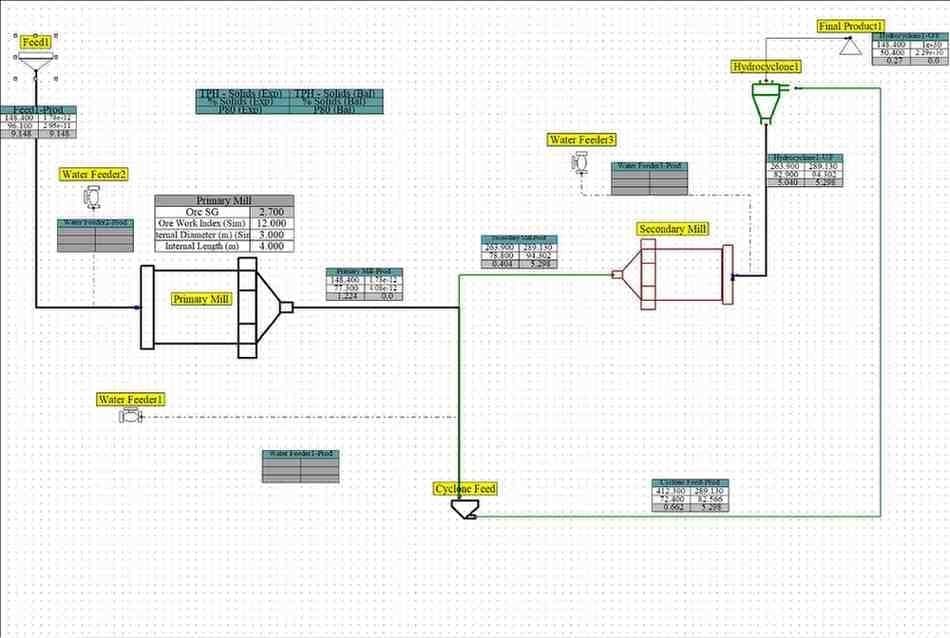
In this werbinar we demonstrate how to model a mineral processing plant which seeks to configure a dual-stage grinding circuit to produce a flotation feed of approximately 150 µm. The circuit will comprise a Rod Mill, Ball Mill, and Hydrocyclone, designed to operate efficiently at reduced plant throughput of 160 TPH.
March 29, 2022 10:00 - 11:00 AM
What you'll discover on this live webinar:

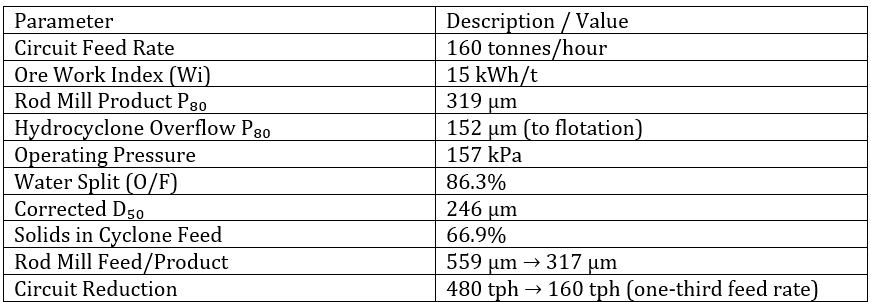
The plant’s objective is to develop and simulate a complete Rod Mill–Ball Mill–Hydrocyclone circuit to achieve:
- Target grind size: P₈₀ ≈ 152 µm (Hydrocyclone Overflow)
- Optimized energy consumption
- Stable circulating load and water balance

The circuit must be validated through simulation and performance analysis, ensuring the design achieves the required throughput and particle size targets while maintaining hydraulic stability.
Register Now
Fill out this form to register for the webinar
Key Learning Outcomes
Here's what you'll learn:
✅ Integrate multiple comminution and classification units into a single simulation circuit.
✅ Configure and balance a closed grinding system using JKSimMet.
✅ Analyze key process parameters, including circulating load, classification efficiency, and product size distribution.
✅ Assess circuit energy performance and identify optimization opportunities.
✅ Translate simulation findings into actionable design and operational insights
Problem Statement
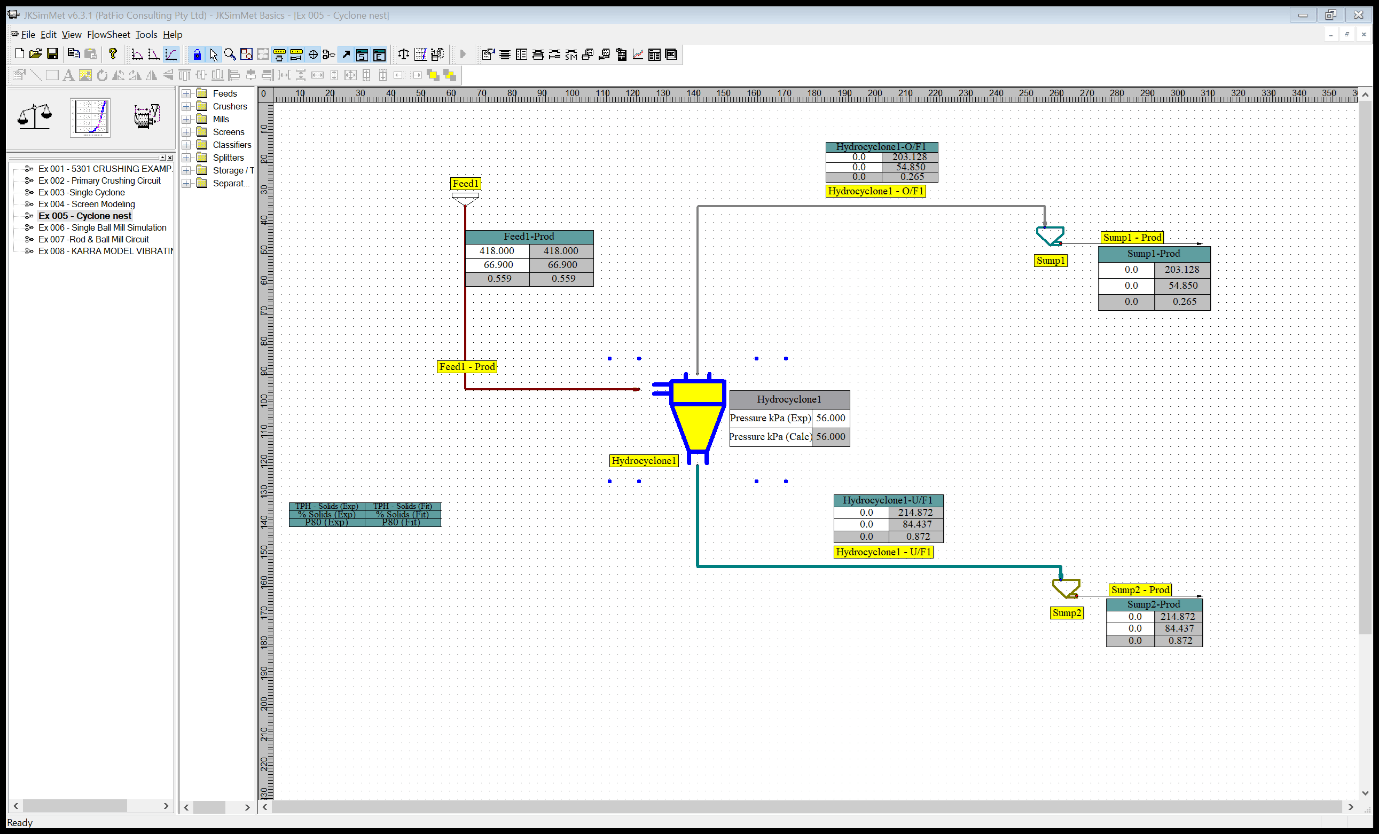
Integrating multiple comminution and classification units into a single, efficiently operating closed circuit is a central challenge in mineral processing plant design. Understanding the dynamic interactions between mills and hydrocyclones is critical for achieving target grind size, throughput, and classification efficiency. This case study is derived from PATFIO Consulting’s advanced JKSimMet training program and represents a continuation of prior exercises involving individual unit simulations.
A mineral processing plant seeks to simulate and optimize a combined grinding and classification circuit consisting of a Rod Mill, Ball Mill, and Hydrocyclone. The goal is to achieve a product suitable for flotation (P₈₀ ≈ 152 µm) while minimizing energy consumption and maintaining stable circulating loads. The simulation must integrate real operational parameters to produce actionable design insights.
Sign up below to get access
Sed dolor sem, consectetuer gravida, ultrices sed, tristique sit amet, dui.